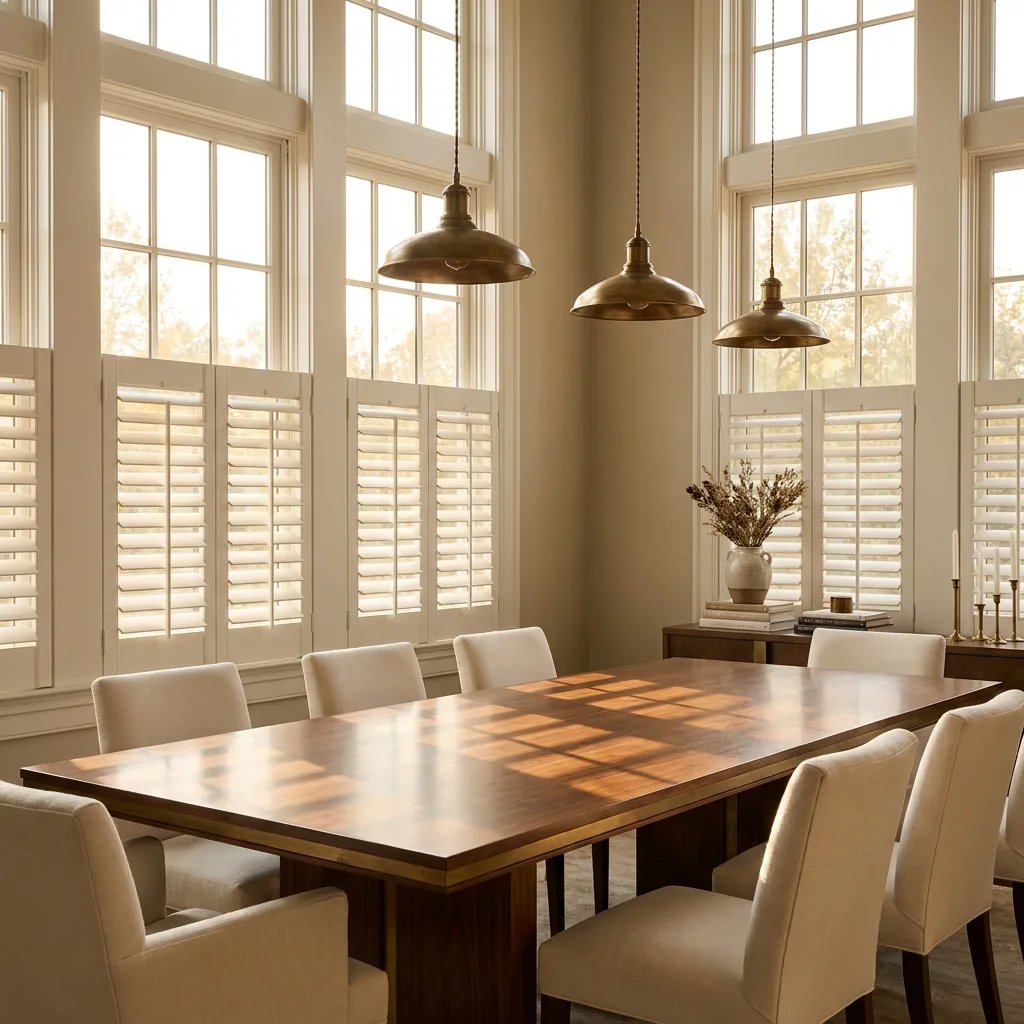
Everything that isn't a shutter, a cellular, a sheer vane, a zebra, a solar, or a woven wood ends up in this guide — which is to say, the largest single category in the catalogue. Wood blinds, faux wood, custom drapery, Roman shades, valances, cornices, motorized rods. This is the complete tour, organized by what they do.
Real wood blinds
Horizontal hardwood slats — basswood, oak, or alder — strung on a lift cord. Slats tilt to control light. Slat sizes: 1″, 2″, and 2.5″ (most common). Real wood blinds carry warmth and grain that no faux can match, and they take stain beautifully — when you want blinds to match a wood floor or stained trim, real wood is the only honest answer.
Best for: studies, living rooms, primary bedrooms with stained trim, dining rooms.
Faux wood blinds
The composite cousin — molded polymer or PVC slats that look like wood from across the room. About half the cost of real wood, fully waterproof, no warp. The right choice for any wet or humid room.
Best for: bathrooms, kitchens, laundry, mudrooms, garages, anywhere a real wood blind would have a short life.
Cordless and child-safe
Every wood and faux-wood blind we sell is cordless. The corded lift mechanism was effectively retired from the residential category in 2018 for child-safety reasons, and we won't sell a corded blind even on request. Lift is by hand on the bottom rail or, on premium lines, by motor.
Vertical blinds and panel tracks
For sliding glass doors and very wide picture windows. Vertical blinds (vinyl, fabric, or faux wood vanes hung from an overhead track) are the budget answer; panel-track systems are the modern luxury answer — large flat fabric panels that traverse on a track like a sliding wall.
Both bypass each other into a tight stack on one side, opening the full opening for use.
Roman shades
Soft fabric panels that fold into horizontal pleats when raised. Available in three styles:
- Flat Romans. Crisp horizontal seams. Modern, architectural.
- Hobbled Romans. Soft fabric horseshoe-shaped folds even when fully lowered. Traditional, dressier.
- Relaxed Romans. Bottom dips slightly in the center. Casual, coastal.
With or without a blackout liner. Cordless or motorized lift. Right for kitchens, dining rooms, primary bedrooms (with blackout), nurseries, breakfast nooks.
Vignette Modern Romans (Hunter Douglas)
A specific premium line worth its own callout. Hunter Douglas Vignette is a modern Roman with no exposed cords or rear-mounted hardware — the fabric rolls into an integrated headrail when raised, eliminating the bulk of a traditional Roman fold. PowerView-motorized, beautifully engineered, and the most-installed Roman in our showroom.
Custom drapery
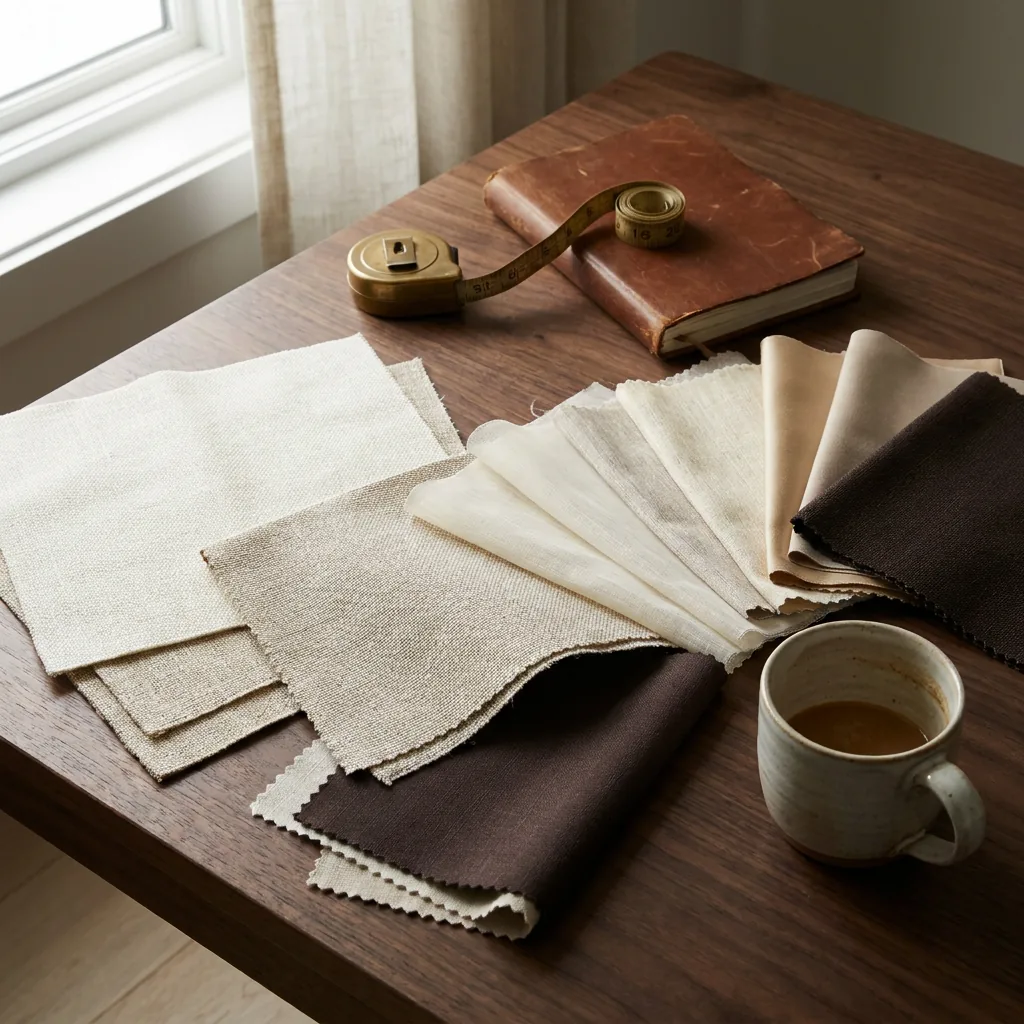
Floor-to-ceiling fabric panels — the most timeless treatment in the category, and the one that transforms a room more than any other. Drapery is sold as the panels themselves, plus a rod, plus hardware. We make them as a kit — custom-measured panels, custom-cut rod, ceiling-mounted brackets if appropriate.
What we tell every drapery client
- Hang the rod high. 6–10 inches above the casing, not on it. Floor-length panels look 2–3 feet taller when hung from a ceiling-mounted rod.
- Skim the floor. Custom panels should kiss the floor, never puddle (unless puddle is the look you're after — but mind the dust).
- Double the fullness. 2.0–2.5× the rod length in fabric width for proper drape. Skinny panels read cheap.
- Line everything. Even sheer panels benefit from a sheer liner — adds weight, hangs better, lasts longer.
A room is finished when the drapery hits the floor. Every time.
Sheers, valances, cornices, top treatments
- Sheers — translucent fabric panels, hung alone or layered behind drapery. The softest light filter in the catalogue.
- Valances — short fabric treatment across the top of the window, covering the hardware. Traditional but coming back in transitional design.
- Cornices — hard upholstered or wood top treatment. Architectural, formal, less common.
- Top treatments — catchall for valance/cornice/swag combinations on bay windows and formal rooms.
Motorized drapery rods
Somfy Glydea, Lutron Sivoia, and Hunter Douglas Designer Drapery Rod all motorize a custom drapery rod. The drape traverses left or right (or both, from the center) on voice or remote command. Worth it on tall windows, wide rods, and primary bedrooms where the drape closes nightly. More on motorization here.
Skylight, French door, bay window, arched specialty
- Skylight shades — specialty cellular shades operated by pole or motor. The only honest answer to direct overhead sun.
- French door shades — small cellular or roller shades mounted directly on the glass with a hold-down at the bottom. Measuring guide here.
- Bay window treatments — three or five separate inside-mount shades, coordinated by fabric and lift mechanism.
- Arched windows — cardboard-templated, custom fabricated. Available in shutters, cellular, woven wood, and Roman.
Our default soft-treatment spec
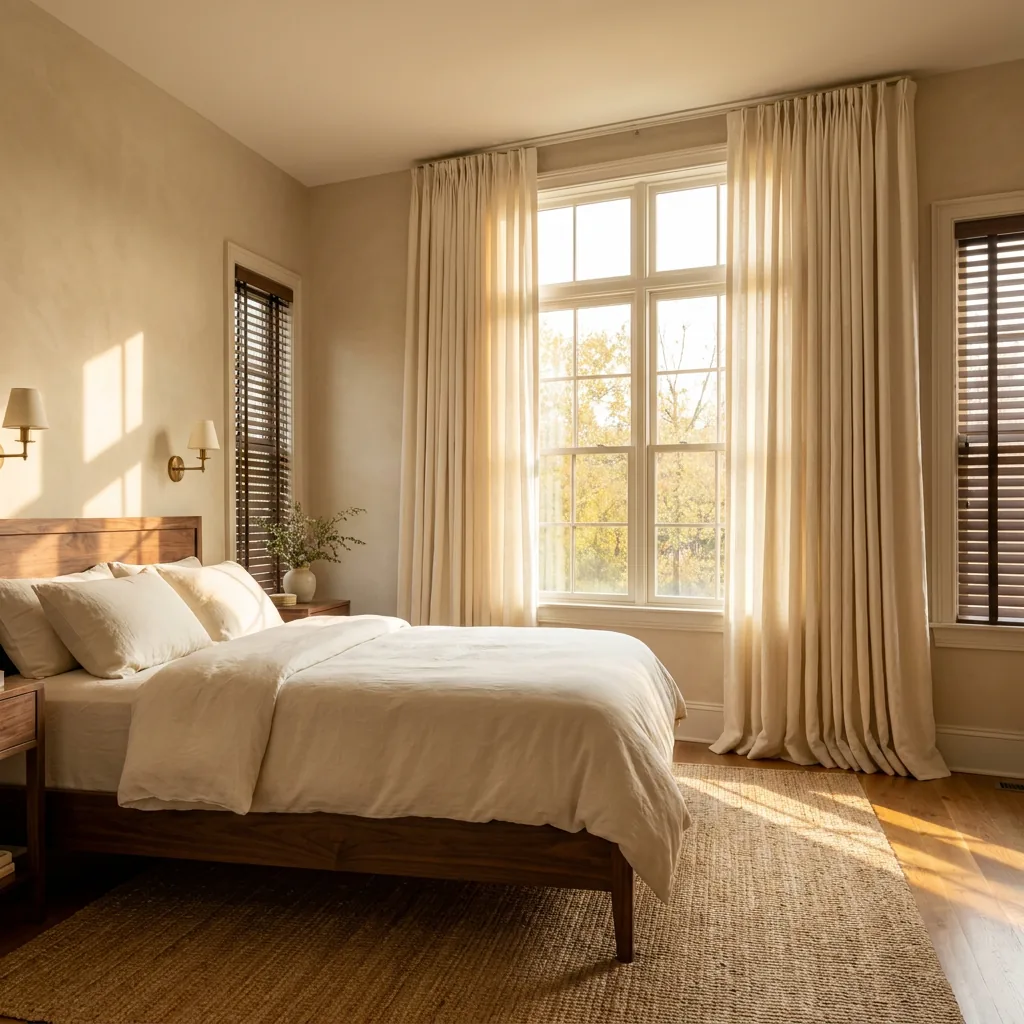
For a primary bedroom in a typical Tennessee home: 2.5″ real-wood blinds on the side windows in a stain matched to trim, cream linen drapery panels on the center window, ceiling-mounted on a motorized rod. The combination most clients ask for the photo of.
Cost ranges
- Faux wood blinds, cordless: $90–$240 per window installed
- Real wood blinds, cordless: $140–$420 per window installed
- Vertical blinds / panel track for sliders: $340–$1,200 per opening
- Flat or hobbled Roman shades: $280–$680 per window installed
- Hunter Douglas Vignette Modern Roman: $420–$880 per window installed
- Custom drapery panels (lined, custom): $380–$1,200 per panel
- Motorized drapery rod: $1,200–$3,800 per rod
For a consultation that walks every soft treatment on the catalogue — wood blinds, drapery, Romans, valances, motorized rods — call or text 629-298-8241 or book a free visit.