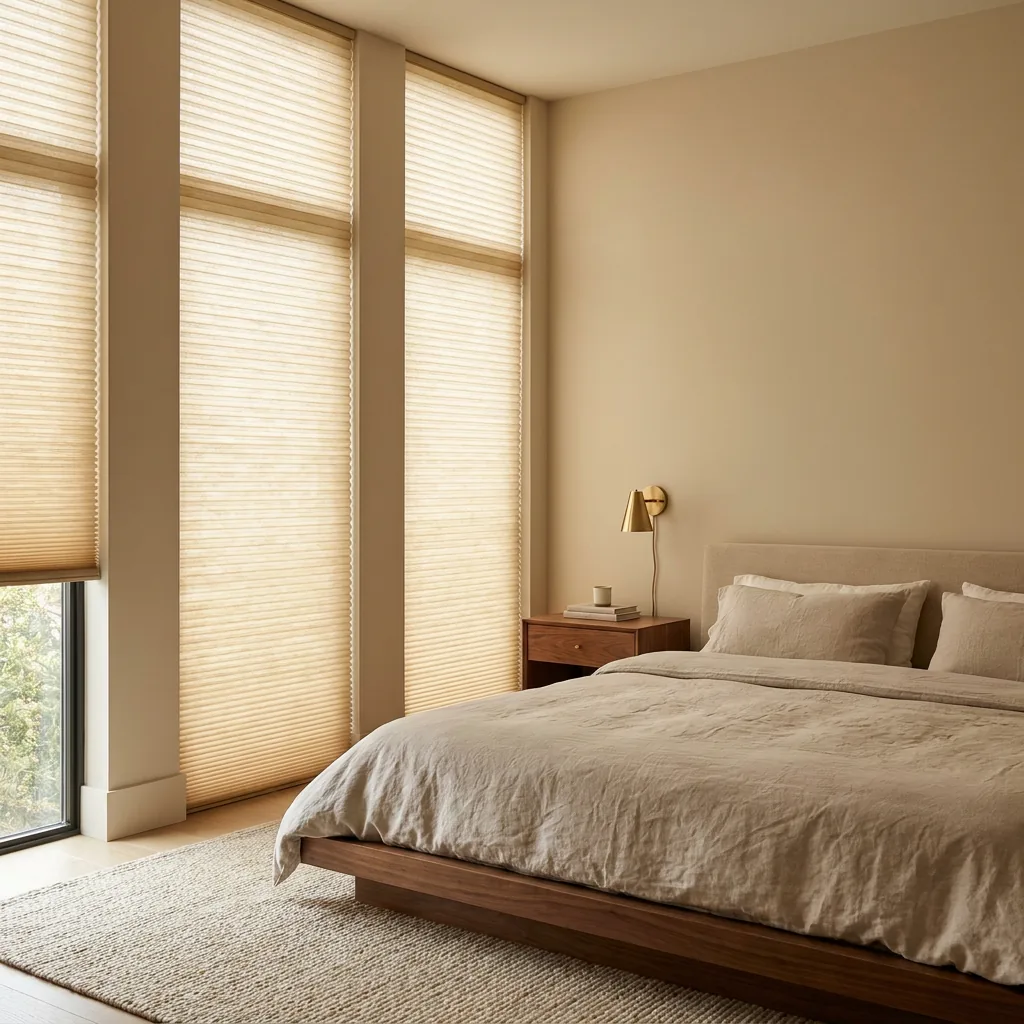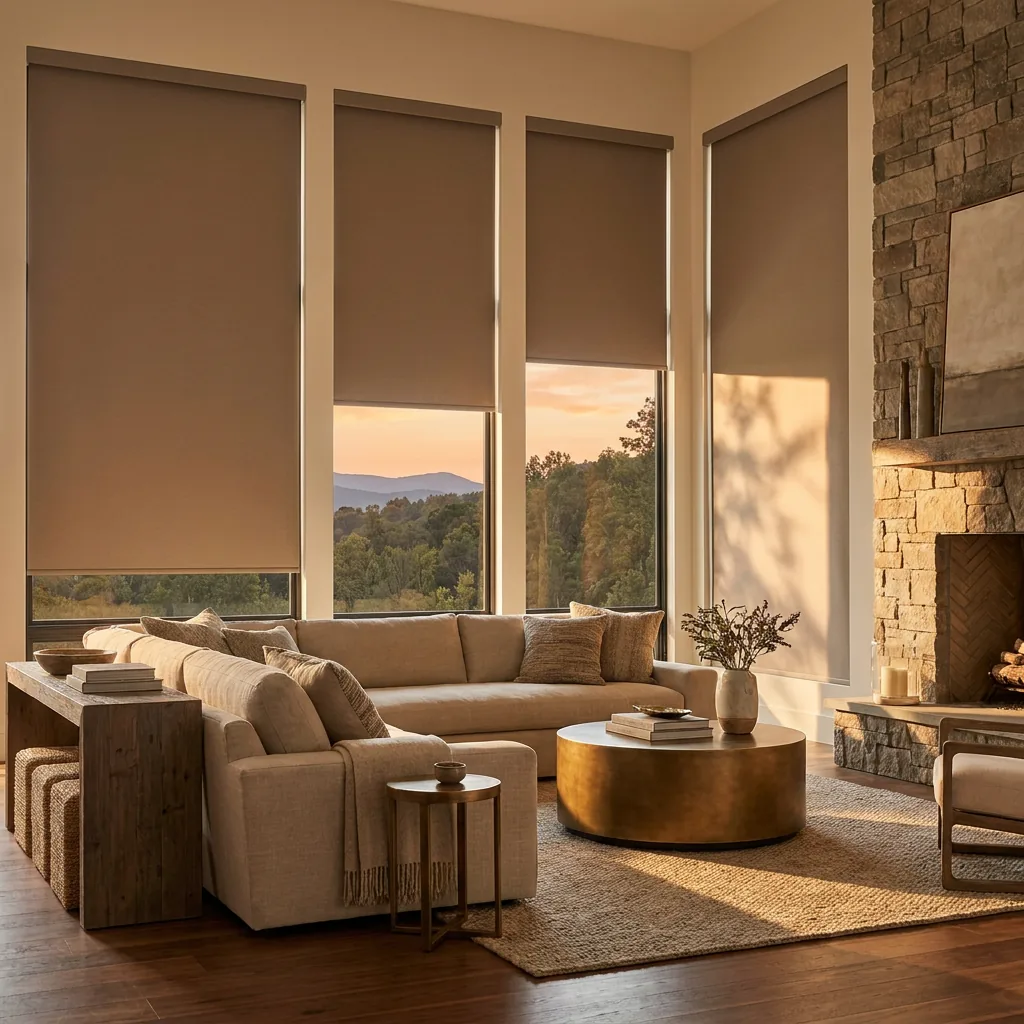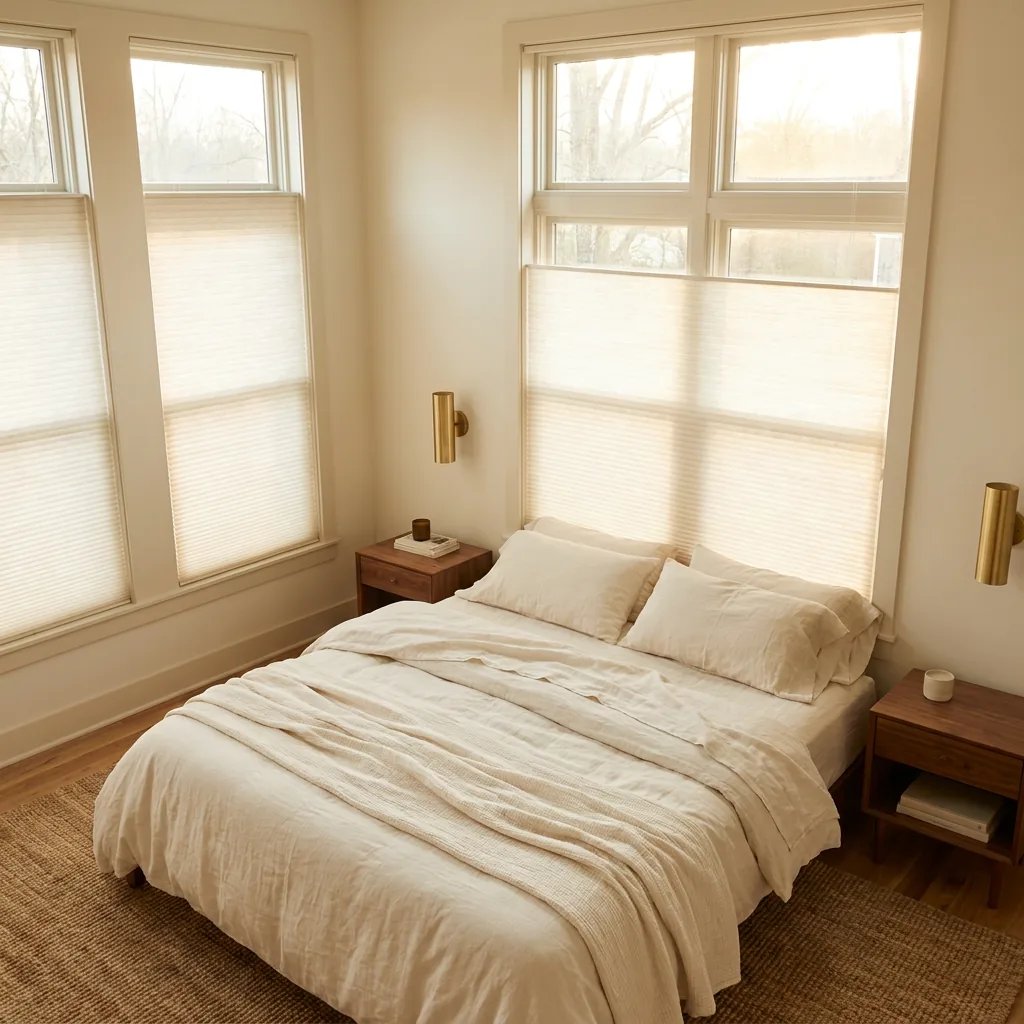
Cellular shades — also called honeycomb shades — are the most-recommended single product in our showroom. They insulate, they sound-dampen, they have the broadest fabric range of any shade type, and they happen to be one of the most affordable premium treatments on the market. Here is the complete guide to what they are, the variants you can spec, and the rooms where they out-perform every other option.
How honeycomb shades work
The fabric is folded into hexagonal cells that trap a column of air across the face of the window. That air is the insulator. The principle is the same as a thermos: still air between two surfaces is the most efficient thermal break you can build out of a soft material. The more cells, the more insulation.
Single, double, and triple cell
- Single cell. One row of cells. Slimmest stack when raised, lightest fabric. The right choice for small windows, narrow casings, and anywhere energy is a secondary concern.
- Double cell. Two rows of cells stacked front-to-back. The mainstream choice — most cellular shades we install are double-cell. Better insulation, slightly thicker stack.
- Triple cell (Architella). Hunter Douglas's premium construction — three cells in a complex geometry. The most insulating soft shade made. We spec it for Tennessee primary bedrooms, sunrooms, and any window with bad solar gain.
Fabric types
- Light-filtering. Allows soft, diffused daylight. Good for living rooms, dining rooms, kitchens.
- Room-darkening. Cuts most light without going fully black. Right for guest bedrooms and family rooms.
- Blackout. Opaque fabric paired with side-channel light blockers — reaches true darkness. The bedroom answer. More on bedroom blackout here.
- Sheer cellular. A newer category — semi-transparent cellular fabric for picture windows that need glare control without view loss.
A cellular shade is the rare treatment that performs better than it photographs.
Top-down / bottom-up
The single best upgrade on a cellular shade. Two cords (or two motor controls) let you lower the top of the shade independently from raising the bottom — so you can have privacy from the sidewalk and full daylight from the sky at the same time. Adds about 15% to the cost. Worth it on any bedroom or street-facing window.
Cordless and motorized
Every cellular shade we sell is cordless or motorized — corded shades have been a child-safety nonstarter since 2018. Cordless is the default. Motorization adds $80–$150 per window and integrates with Alexa, Google Home, and Apple HomeKit through Hunter Douglas PowerView or Somfy. More on motorization here.
The lines we install most
- Hunter Douglas Duette. The category benchmark. Available in single, double, and triple-cell Architella. PowerView motorization, LightLock blackout side-channels, top-down/bottom-up — every feature in the category.
- Hunter Douglas Sonnette. A rolled cellular with a unique rounded profile — soft, modern, no horizontal pleat lines. Sits between a roller and a cellular visually.
- Norman Honeycomb. Excellent fit and finish at a more accessible price point. Cordless, motorized, and blackout all available.
- Graber CrystalPleat. The value option. Single and double cell, cordless, room-darkening.
Our default 2026 cellular spec
Hunter Douglas Duette Architella triple-cell, top-down/bottom-up, blackout fabric with LightLock side channels, cordless lift — or PowerView motorized for primary bedrooms. The single most-installed configuration in our showroom for the past three years.
Where cellular shades win
- Primary bedrooms. Best-in-category blackout when properly mounted.
- Children's bedrooms and nurseries. Cordless, soft, quiet, and naturally child-safe.
- Bedrooms over kitchens or living rooms. The sound dampening is real.
- Sunrooms. Triple-cell Architella cuts solar gain dramatically.
- Energy-conscious homes. Most insulating soft shade on the market.
- Skylights. Specialty cellular skylight shades are the only honest answer to direct overhead sun.
Cost
Typical installed pricing in Tennessee (2026):
- Single cell, cordless: $80–$200/window
- Double cell, cordless: $140–$280/window
- Triple cell (Architella), cordless: $220–$420/window
- Add for blackout liner: $30–$60/window
- Add for top-down/bottom-up: ~15%
- Add for motorization: $80–$200/window + hub
For a sample-in-hand quote across Gallatin, Nashville, Hendersonville, Franklin, Brentwood, Murfreesboro and the 90-mile radius, call or text 629-298-8241 or book a free in-home consultation.