Not every window in the house needs a $700 plantation shutter. Sometimes the right answer is a clean, durable, custom-fit faux wood blind for under a hundred dollars a window — and we sell as many of those as we do anything else. This is the complete guide to affordable blinds at Stately Shades: what faux wood is, what it costs, where it belongs, and where it doesn't.
The honest pitch
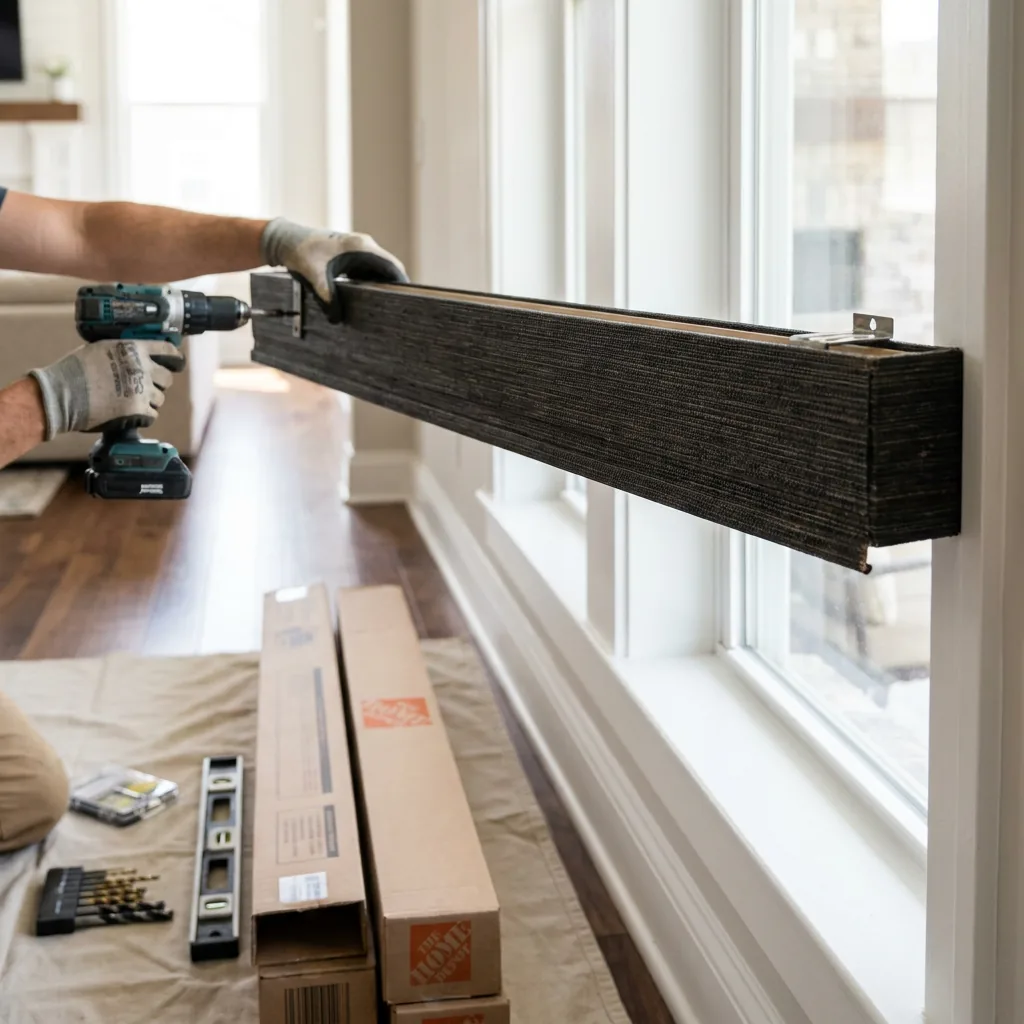
Custom-fit faux wood blinds at our showroom start at $89 per window installed. That number includes measure, slat custom-cut to your opening, cordless child-safe lift, white finish, brackets, valance, and our install crew putting it on the wall level. A whole-house package of 8–12 windows most often lands between $850 and $1,500 installed. The same measure-and-install care goes into every blind, regardless of price.
What faux wood actually is
Faux wood is a molded composite — usually a PVC, polystyrene, or wood-polymer hybrid — pressed into the same slat profile as real hardwood blinds. Looks like wood from across the room, weighs about 30% more (because it's denser), and shares zero of the weaknesses of real wood. Specifically:
- Doesn't warp. Real hardwood blinds in a Tennessee kitchen will eventually cup or twist at the slat ends; faux wood will not.
- Doesn't absorb moisture. Showers, dishwasher steam, laundry humidity — none of it matters.
- Cleans with a damp cloth. Real wood needs to stay dry; faux wood is washable.
- Holds finish longer. Factory-applied paint doesn't chip or yellow the way wood finishes do.
Slat sizes
- 2″ slats — the workhorse. Most-installed size, slimmer profile, looks proportional on small and medium windows.
- 2.5″ slats — modestly more substantial, shows more view when open, the most-installed in our showroom this year. About $10–$20 more per window.
- 2.5″ with cloth tapes — fabric strips covering the ladder cords. Slightly more formal, hides the stringing detail. Add $20–$40 per window.
Cordless is the default
Every faux wood blind we sell is cordless and child-safe, per the Window Covering Manufacturers Association standard. You lift by the bottom rail, lower with a soft tug. Corded versions are technically available from manufacturers but we won't quote them — there's no reason to put a cord in a house in 2026.
A $89 faux wood blind installed by a pro outlasts a $300 shade installed wrong.
Finish options
- White — the standard. About six variations of white from cool to warm. No upcharge.
- Cream and oat tones — match older trim, add warmth. No upcharge.
- Stains (walnut, oak, espresso, chestnut) — printed on the slat to mimic real wood grain. Beautiful from a normal viewing distance, $15–$35 upcharge per window.
- Custom colors — match a paint chip; add $40–$80 per window and 2 weeks lead time.
Where faux wood belongs
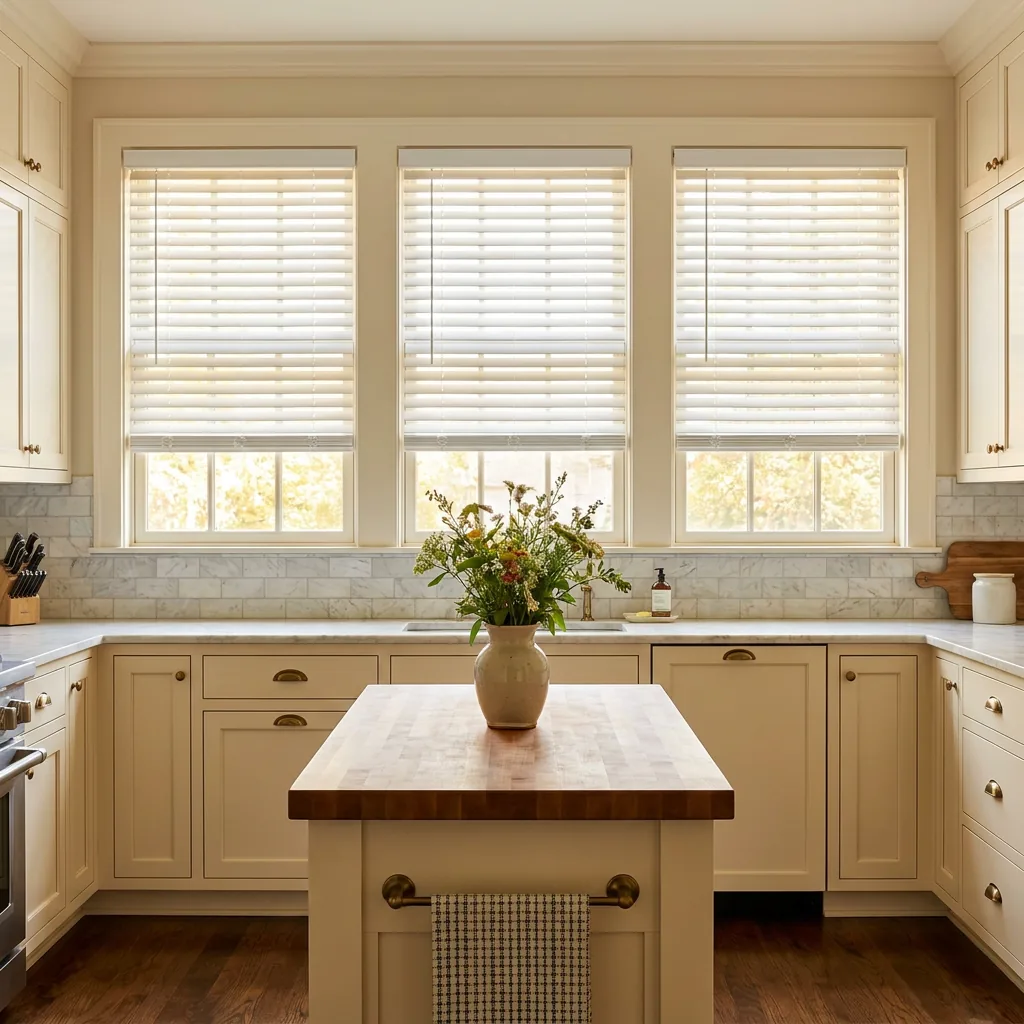
- Kitchens. Splash, grease, steam — faux wood handles all three.
- Bathrooms. Steam doesn't care if your blinds are pretty. Faux wood survives.
- Kids' bedrooms. Cordless safe, durable, easy to replace a slat if it gets snapped.
- Basements, laundry rooms, mudrooms. Humidity-tolerant, no warping.
- Rental properties. Cheaper to spec, longer service life, easy turnover.
- Whole-house value packages. Builders, landlords, and first-home buyers — the affordability difference at scale is real.
Where faux wood doesn't belong
- Formal living and dining rooms where real-wood plantation shutters belong. The eye reads the difference at close range.
- Very wide windows over 72″ — faux wood is heavy enough that wide spans get awkward on a single blind. We split into two and either match them or move up to a different product.
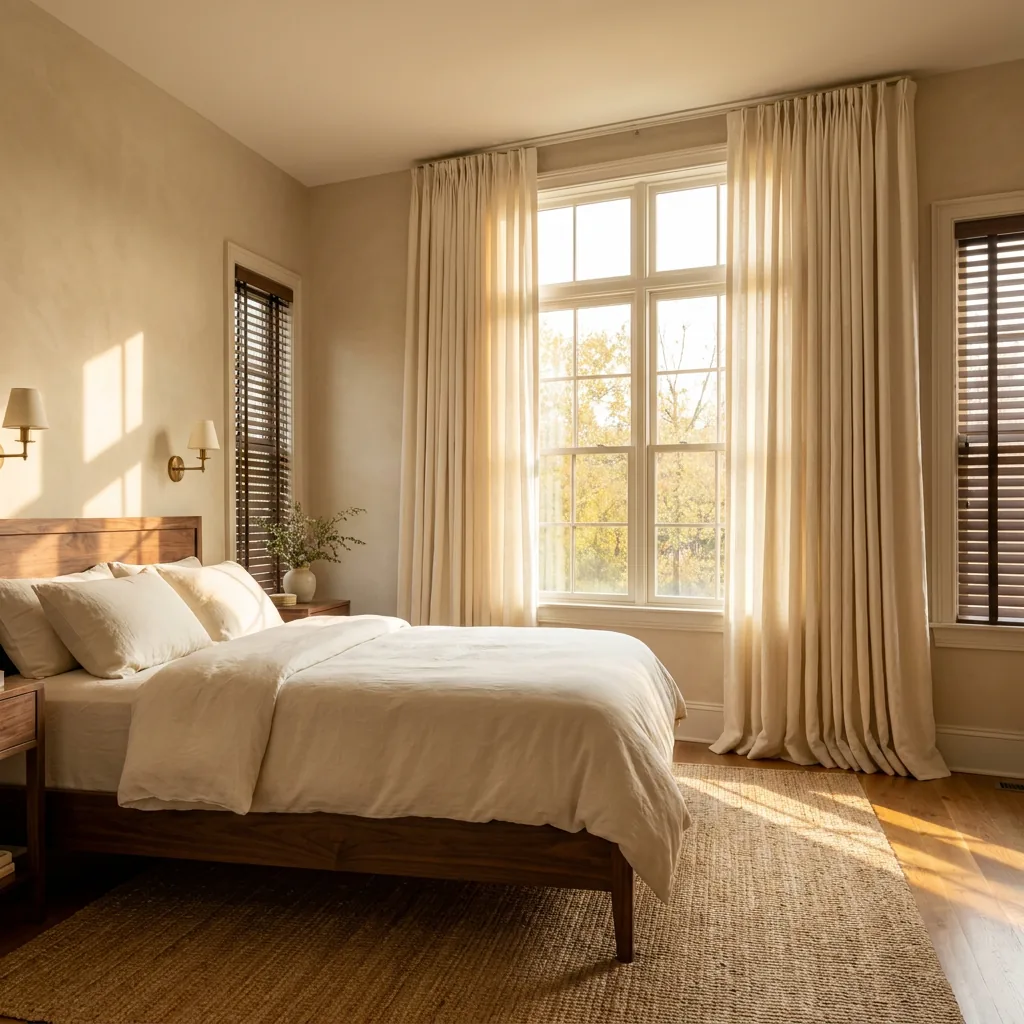
- Primary bedrooms needing true blackout. Faux wood is light-filtering at best; you'll always get sunrise leak through closed slats. See bedroom blind options.
Our default affordable spec
Norman or Graber 2.5″ faux wood blinds, cordless, white finish, inside-mount on most windows. Whole-house package pricing typically lands $90–$140 per window installed, with the per-window price coming down on larger orders. A typical 10-window project: $1,050–$1,300 installed.
What about real wood?
We also sell real-wood blinds — basswood, oak, alder — when stain match matters. Real wood is roughly 60–80% more expensive per window, looks identical from across the room, and lasts about the same time provided it's not in a wet space. More on real wood here.
What about cellular or roller for a similar price?
Good question — and sometimes the answer is "yes, that's better." Affordable cellular shades start around $80/window and are a better choice for bedrooms (better blackout, better insulation). Affordable rollers start around $90 and are better for modern interiors. We'll talk you through which is right room by room — that's what the free consultation is for.
How to get a quote
Call or text 629-298-8241 with the rough window count for your project, or use the contact form. We come out, measure every window, and leave you with a written quote the same visit. If affordable is the priority, we lead with faux wood — and tell you honestly when something else would be a better value.