Zebra, banded, and solar shades are the most-misunderstood category in the showroom — partly because the names overlap (zebra is sometimes called banded; solar sometimes called sun or screen), and partly because they solve very different problems. This is the complete guide to what each one does, where it belongs, and which rooms benefit most.
Zebra and banded shades
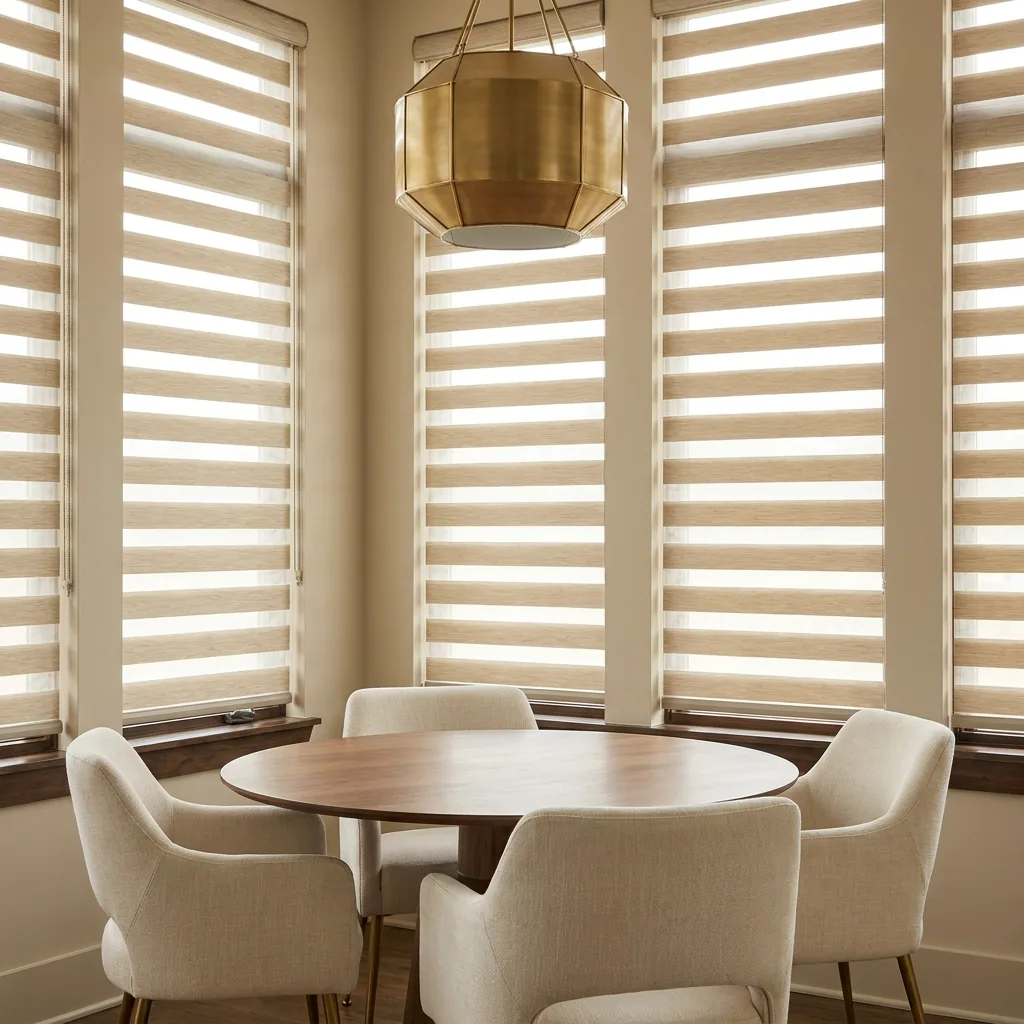
Zebra shades (also called banded or vision shades) are a dual-layer fabric that alternates between sheer and opaque horizontal bands. Both layers roll on the same tube. Sliding one layer relative to the other aligns the bands either to see-through mode (sheer bands overlap, you see out) or privacy mode (opaque bands overlap, you don't).
Lift the shade fully and the entire window is exposed; lower fully and you toggle between view and privacy with the same cord (or motor). One product, two modes.
Where zebra/banded shines
- Modern living rooms — the graphic horizontal band reads contemporary.
- Home offices facing a street — privacy when on camera, view when working.
- Kitchens and breakfast nooks — diffused light when cooking, view when eating.
- Tall narrow windows — the band geometry reads more elegant than a flat roller.
Where it doesn't
- Bedrooms needing blackout — the bands always leak light at the seams.
- Very wide windows — the band alignment can creep at scale; we typically split into two shades.
- Traditional architecture — too graphic for most heritage interiors.
Solar shades
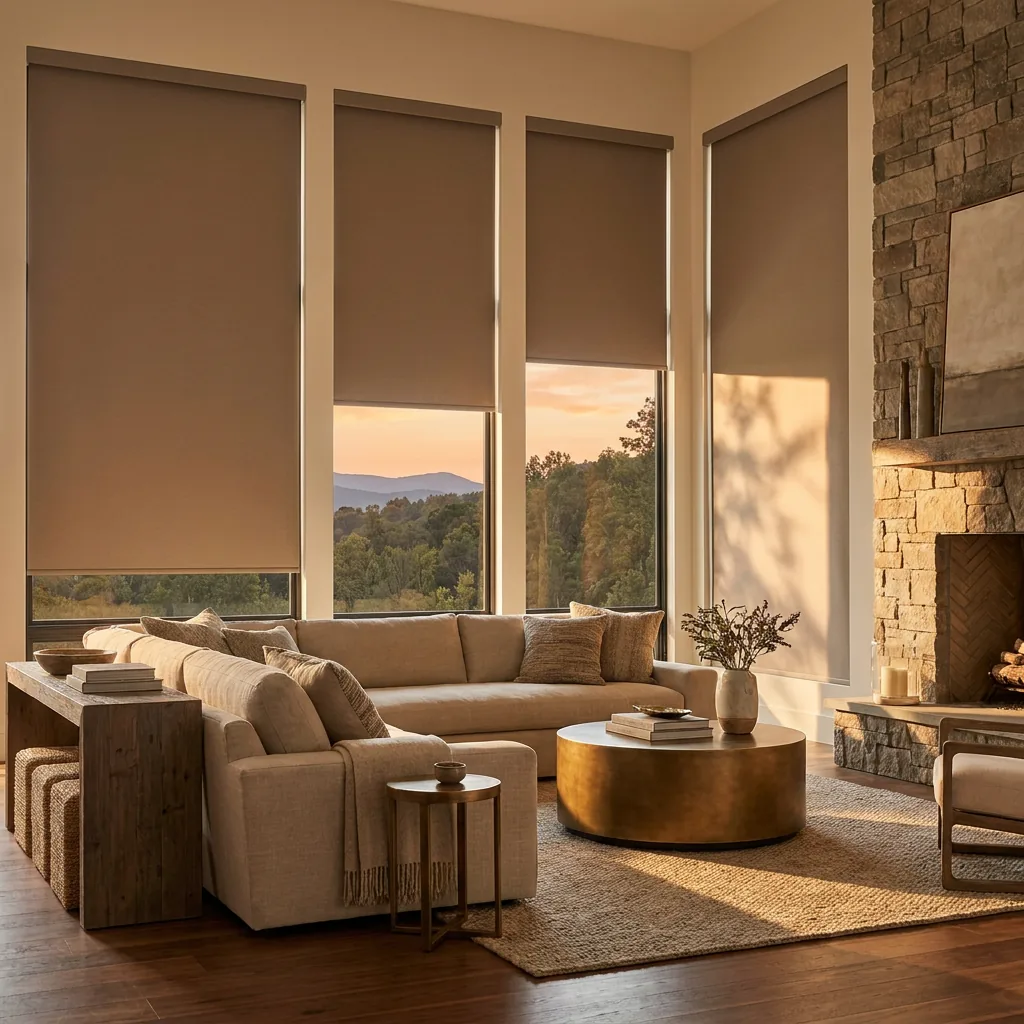
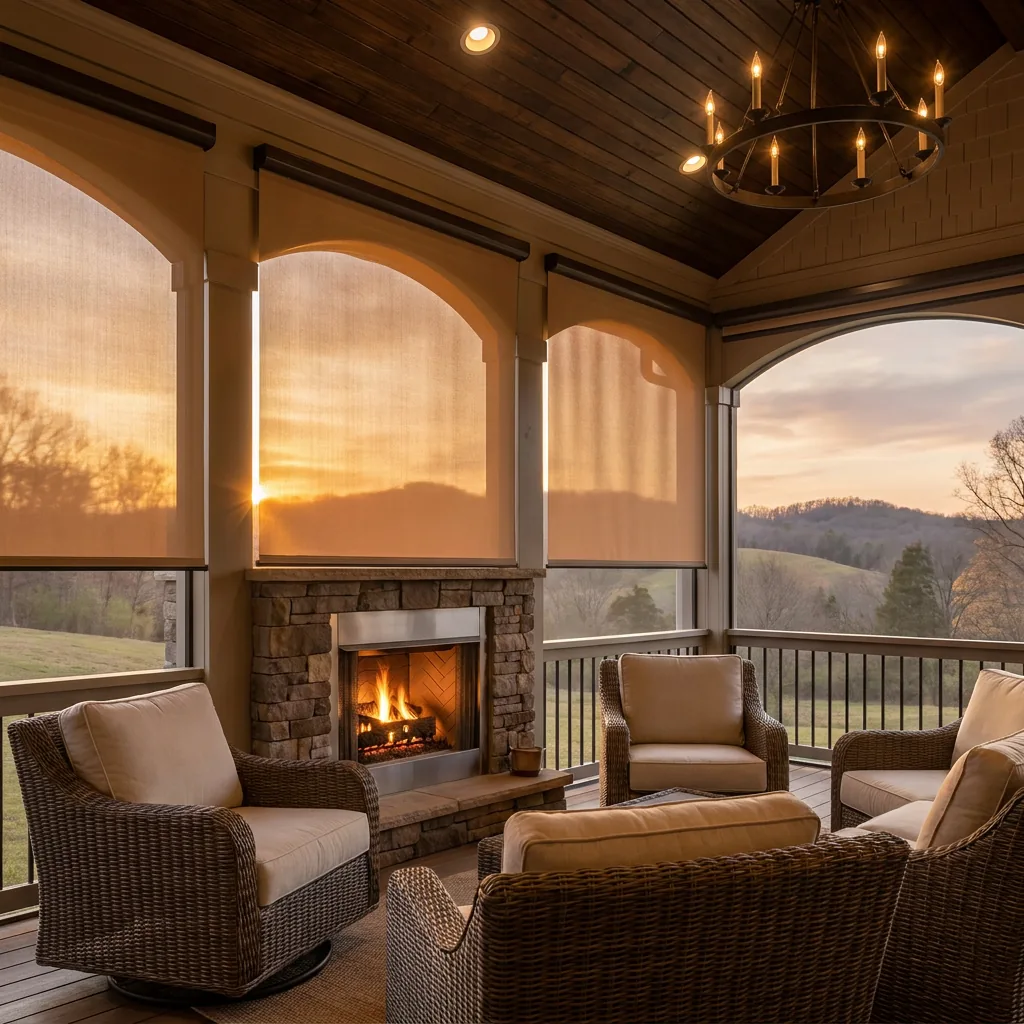
Solar shades — also called screen shades or sun shades — are single-layer roller shades made of a specially-engineered woven mesh. The mesh blocks UV and a percentage of visible light (the openness factor) while preserving the view. They are not for privacy; they are for glare and heat control.
Openness factors
- 1% openness. Cuts ~99% of UV and most glare. Best for very bright west-facing windows. View is dimmed but still legible.
- 3% openness. The most popular. Best balance of view, glare control, and heat rejection. Our default solar spec.
- 5% openness. More daylight, more view, modest glare reduction. Right for north-facing rooms or places where view is the priority.
- 10% openness. Sheer-side of the category — minimal heat rejection, maximum view.
Where solar wins
- Home offices. Cuts screen glare without darkening the room.
- West-facing great rooms and kitchens. Block heat without losing the lake/yard/skyline view.
- Sunrooms. Pairs perfectly with cellular shades for night insulation.
- Walls of glass. Multiple synchronized motorized solar shades on PowerView or Somfy.
- Anywhere you'd put drapery for layering. Solar shades behind drapery is one of the most-photographed combinations in modern editorial interiors.
A solar shade is the only treatment that cuts heat while leaving the view fully intact. That's its entire job.
Light filtering vs. solar — the confusing pair
Light-filtering fabric (used in standard rollers, cellulars, Romans) is opaque and diffuses light. Solar mesh is woven, allows direct view-through, and grades by openness percentage. Different fabrics, different uses. We see homeowners confuse the two constantly — when shopping online, look for an "openness" number on the spec sheet; if it has one, it's solar.
Motorization
Both zebra and solar shades are excellent motorization candidates. Solar shades with sun sensors are some of the most-loved smart-home installs we do — they drop automatically at noon in summer and raise at 6 p.m., entirely without input.
The lines we install most
- Hunter Douglas Designer Banded — premium zebra construction, PowerView motorization.
- Norman PerformanceRoller (zebra) — excellent value, cordless or motorized.
- Hunter Douglas Designer Screen (solar) — the benchmark solar shade.
- Phifer SheerWeave / Graber Solar — broad fabric range, every openness factor.
Cost
- Zebra/banded shades, cordless: $120–$340 per window installed
- Zebra, motorized: $280–$540 per window installed
- Solar shades (3% openness), cordless: $140–$320 per window installed
- Solar shades, motorized with sensor: $320–$640 per window installed
For a sample-in-hand quote — fabric swatches in your own light, openness factors compared side by side — call or text 629-298-8241 or book a free consultation.