It is the most common comparison we hear in a first call. Should I do plantation shutters or roller shades? The honest answer is that they solve overlapping but not identical problems, and most of the homes we work on end up with both — shutters in the rooms that benefit from architecture, rollers in the rooms that benefit from a clean modern panel. Here is how we sort them out.
The 30-second summary
Plantation shutters are architecture. They convey with the house, they last 20–25 years, they look correct from the curb, and they are the higher-cost option. Roller shades are a clean, modern, fabric panel — lower cost, faster to update, available in solar/light-filtering/room-darkening/blackout, and the right answer for any room where the window is meant to disappear.
Cost
Roller shades almost always win on cost, even at the premium end. For a typical 36×60″ window in 2026:
- Roller shades — $90 (basic light-filtering) to $480 (premium blackout, motorized) installed.
- Composite plantation shutters — $350–$700 installed.
- Hardwood plantation shutters — $700–$1,500+ installed.
A whole-house package of rollers will typically cost a third to a half of the same house in shutters. For full pricing breakdown, see our shutter cost guide for Tennessee homes.
Light control
Plantation shutters
Louvers tilt from fully closed (privacy + some darkness, but never full blackout) to fully open (most of the glass visible). The control range is excellent for daylight, modest for blackout. Sunrise will always leak through closed louvers.
Roller shades
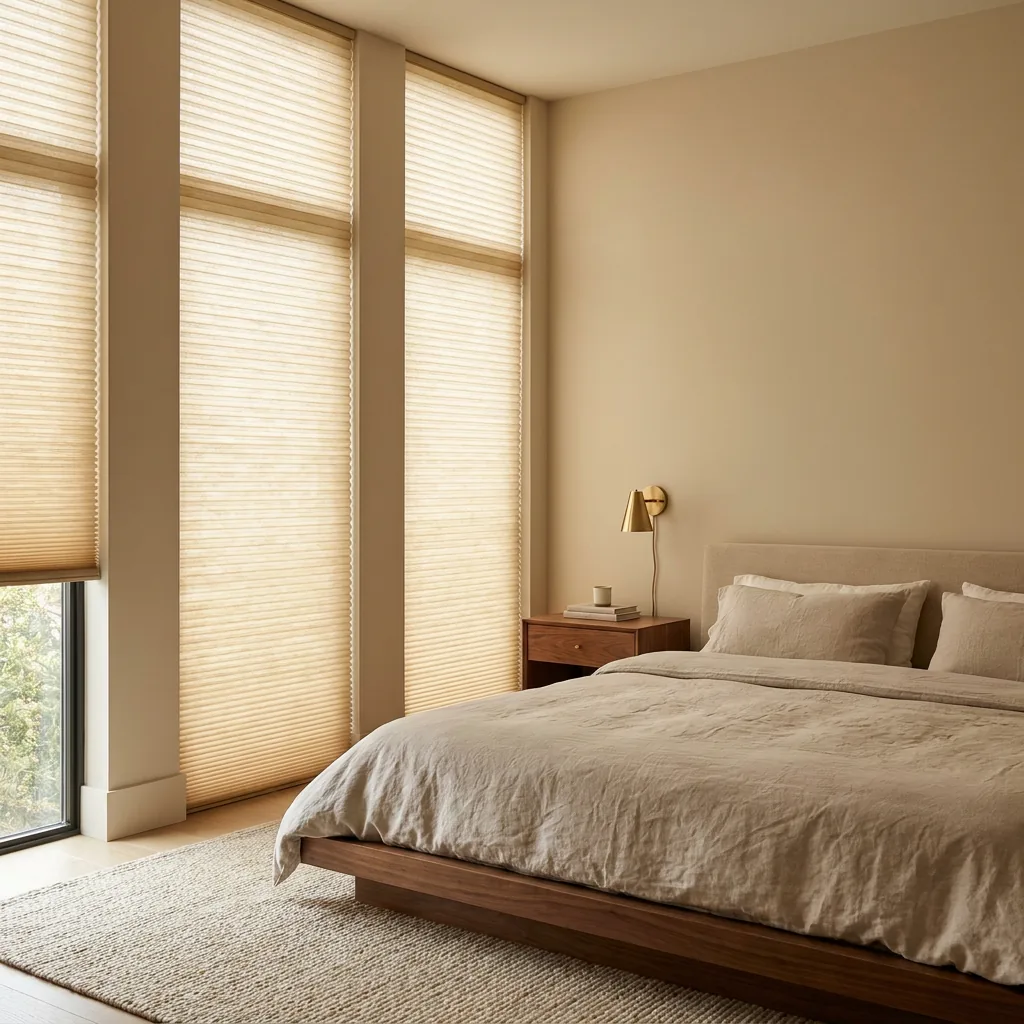
Roller fabrics range from sheer solar (5% openness) to full blackout. With side channels, blackout rollers reach true darkness — the kind a primary bedroom actually needs. The trade-off is that a roller is binary in a way a louver isn't: up, down, or somewhere in between. You don't get the same "tilt to redirect light" gesture.
Shutters control the quality of light. Rollers control the quantity.
How they look
Different homes ask for different answers.
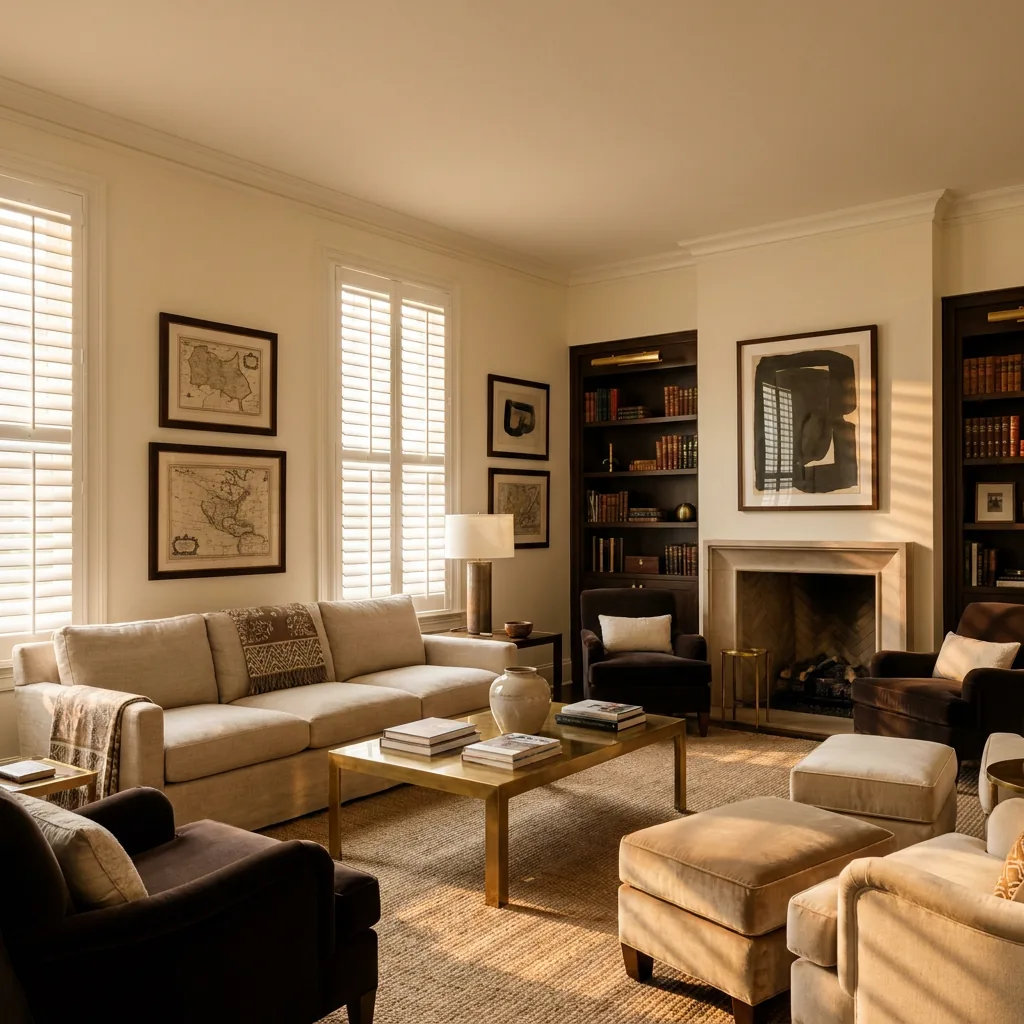
- Traditional — Federal, Colonial, transitional Southern. Shutters look correct. Rollers can feel hidden, almost stealthy, which can be the right move behind drapery.
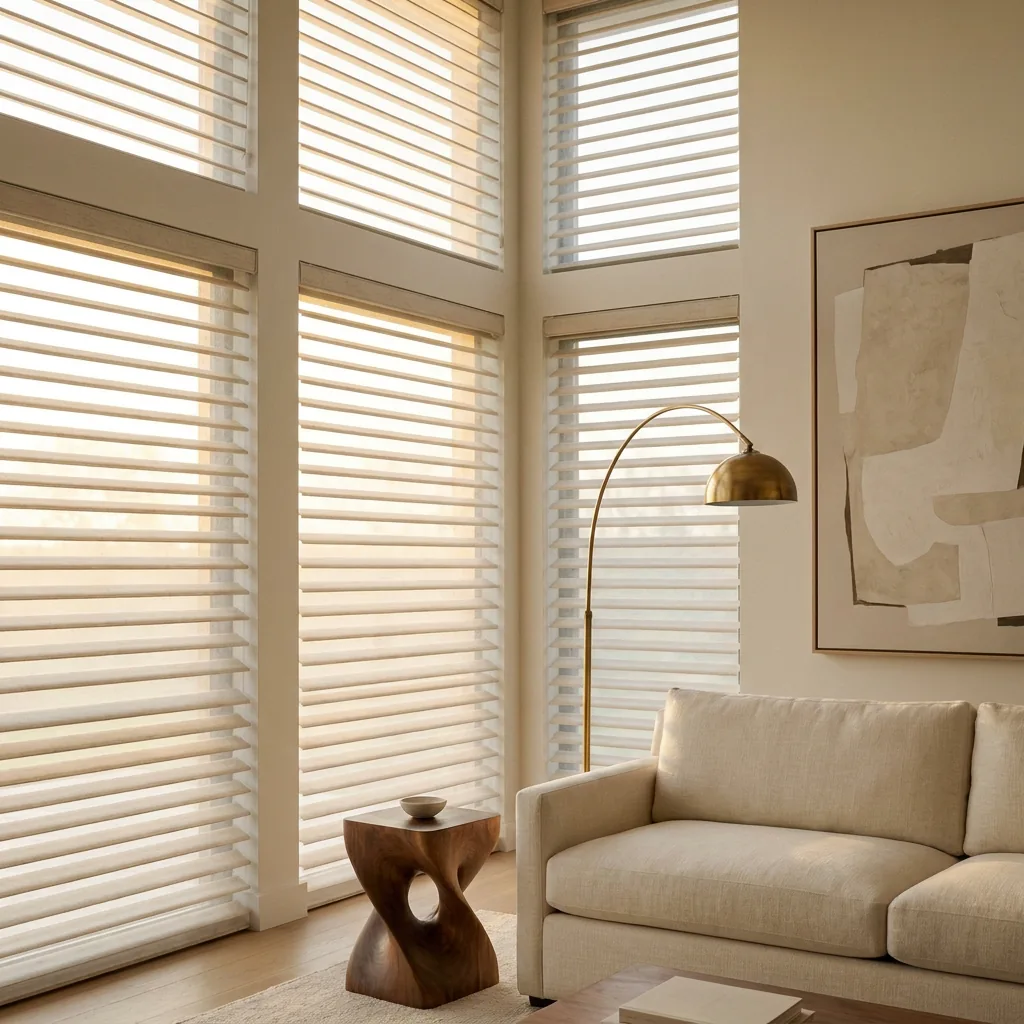
- Modern — clean lines, minimal trim, large glass. Rollers (especially solar) look intentional. Shutters can compete with the architecture.
- Farmhouse / cottage — both work. Shutters lean traditional, rollers paired with linen drapery lean current.
Lifespan
Shutters are built once and live 20–25 years with normal use. Rollers live 8–15 years, depending on fabric and how hard the mechanism is used. Motorized rollers depend on the motor (Somfy and PowerView motors are warrantied 5 years, and we have ones in the field at 15+).
On a 30-year ownership horizon, the math actually favors shutters in many rooms — you buy them once, roller shades twice. On a 5–10 year horizon, rollers win.
Resale and appraisal
Shutters convey with the house and are treated as a permanent improvement. We routinely see Nashville-area appraisals add 60–75% of plantation shutter cost back into a home's value, and homes in Gallatin/Hendersonville with whole-house shutters tend to sell faster.
Roller shades do not convey unless specified in the contract — most sellers take them with them. They add zero to the appraisal but can absolutely add to the showing impression of a room.
Maintenance
Plantation shutters
Dust with a microfiber duster monthly. Hardwood gets a wax treatment every 3–5 years on dark stains, less on white. Louvers occasionally need a hinge re-tension — a 5-minute job. We include lifetime tune-ups on every shutter we install.
Roller shades
Vacuum with a brush attachment quarterly. Spot-clean fabric stains with mild soap and a damp cloth. Batteries on motorized rollers need swapping every 12–36 months. Lift mechanisms occasionally need replacement after 8–10 years on heavily used windows.
Where each one wins, room by room
Living room
Plantation shutters. Architecture, light play, resale all favor them. The most popular installation we do.
Primary bedroom
Roller blackout, layered with drapery. Shutters leak light at sunrise. More on bedroom blinds here.
Kitchen / breakfast nook
Composite plantation shutters. Holds up to humidity, wipes clean, looks formal enough to anchor a kitchen.
Bathroom
Composite plantation shutters. Same reasons — moisture, privacy, longevity.
Home office
Solar roller shades. Controls screen glare without darkening the room. Often layered behind drapery for after-hours.
Great room / kitchen with large glass
Motorized roller shades. Big walls of glass benefit from synchronized motorization in a way shutters can't match.
Dining room
Either, depending on style. Traditional homes — shutters. Modern — rollers behind sheer drapery.
Sliding glass door
Roller shades, vertical glides, or panel track. Plantation shutters on a slider exist (bypass-track shutters) but are heavy and expensive. For most homes the roller is the right answer.
Our default recommendation
Plantation shutters in the formal rooms and wet rooms (living, dining, kitchen, baths). Roller shades — blackout in the bedrooms, solar in the office, layered with drapery anywhere it serves the style. Most of our Tennessee installs end up with this split.
So which is "better"?
Neither — they are different products that solve different problems. We've installed thousands of each, and the homes that look best almost always use both. If you want one rule of thumb: start with shutters in the rooms guests see, and rollers in the rooms you sleep and work in. From there, drapery does the rest.
For a side-by-side comparison in your own home — same window, same light, both products sampled in person — call or text 629-298-8241 or book a free in-home consultation. We measure, sample, and quote both options on the same visit.